

Custom Web Software for Businesses: The Key to Efficiency and Innovation
8 Ağustos 2026
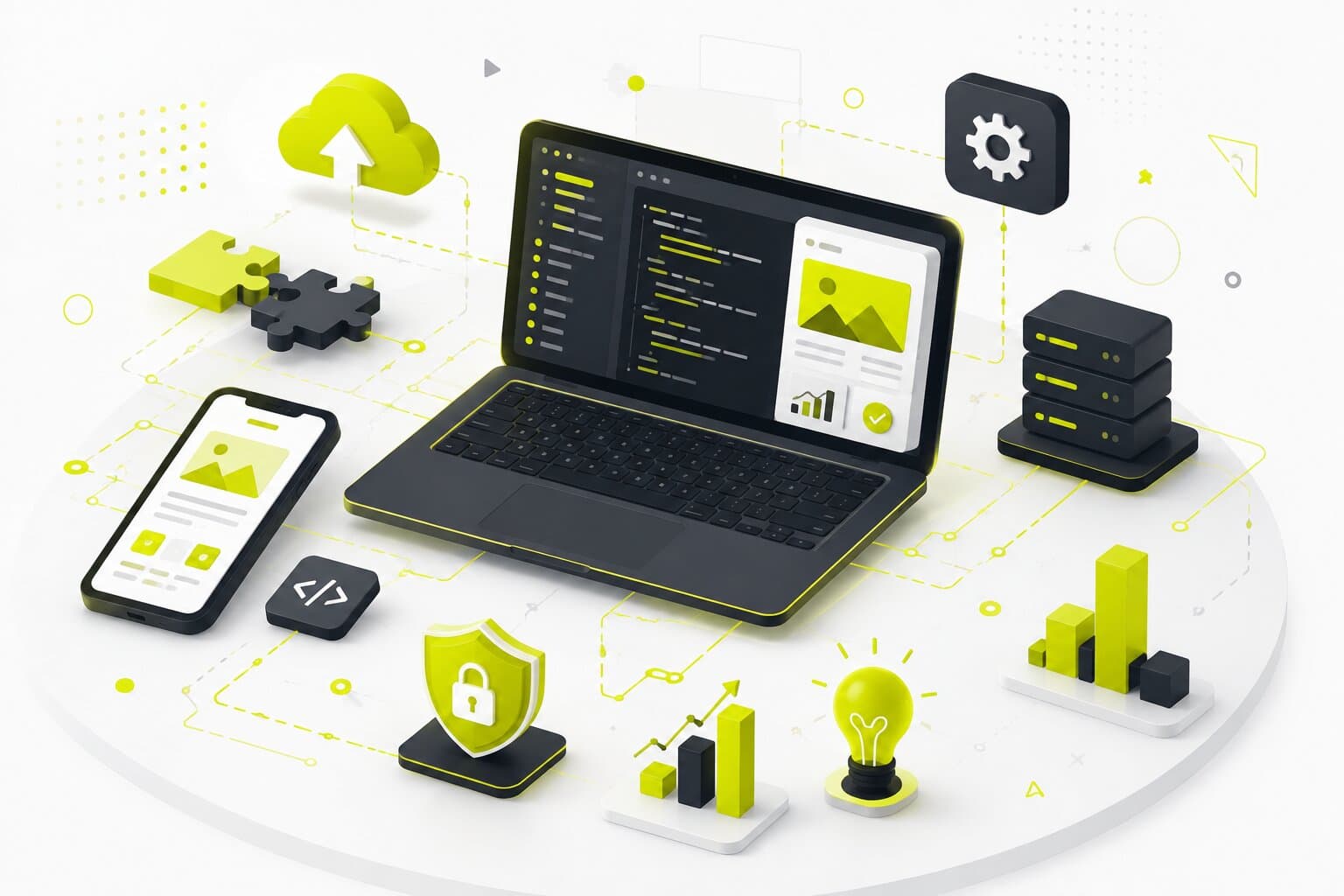
Today's business world is in constant change and transformation at the pace of digitalization. In an environment of growing global competition, using technology correctly and effectively is vital for businesses to survive and grow. While the standard software solutions on the market meet the basic needs of many businesses, every organization has its own unique processes, goals, and corporate culture. This is exactly where custom web software steps in, giving businesses a distinct competitive advantage.
Off-the-shelf packaged software is designed to serve a broad user base and generally meets general-purpose needs. But when a business has specific operational requirements, or the potential to fill a niche gap in the market, standard solutions can fall short. This guide walks business decision-makers in Turkey through why custom web software development is a strategic investment rather than an expense, when it's needed, and how it can add value to your business.
What Is Custom Web Software, and Why Is It Necessary?
Custom web software refers to web-based applications designed and built from the ground up to meet a business's specific needs. Unlike off-the-shelf commercial packages, this software is customized to fully match your business's workflows, processes, and goals.
The Limits of Off-the-Shelf Solutions and the Role of Custom Software
Ready-made solutions on the market — CRM, ERP, or e-commerce platforms — can offer easy setup and low starting costs. However:
Limited Flexibility: If your business has a unique process, off-the-shelf solutions generally can't adapt to it, and you end up bending your processes to fit the software instead. This leads to inefficiency.
Unnecessary Features: Off-the-shelf software comes bundled with many features you won't use. This complicates the interface and can hurt performance.
Integration Challenges: Integrating with your existing systems (accounting, inventory, etc.) is either impossible with off-the-shelf solutions, or requires costly, complex extra work.
Licensing and Subscription Costs: Over the long run, license and subscription fees that scale with user count or feature set can raise the total cost of ownership.
Lack of Competitive Differentiation: Using the same software as your competitors gives you no distinguishing edge in the market.
Custom software removes all of these limits by offering a solution built specifically for your business. Software that fits your business's DNA increases operational efficiency while also laying the groundwork for innovation.
Key Advantages Custom Software Brings to Your Business
Investing in custom web software brings a number of strategic advantages for businesses:
Increased Efficiency and Process Optimization: Automates your business processes, reduces manual errors, and lets your employees focus on more strategic tasks. This means real savings in time and labor.
Cost Savings (Long Term): While the upfront cost may look high, over the long run you gain significant cost advantages by escaping license fees, not having to maintain features you don't use, and increased efficiency.
Flexibility and Scalability: As your business grows or market conditions change, your custom software can easily be updated and extended with new features. This makes it easier to adapt to future needs.
Data Security and Control: Custom software hosted on your own servers or a trusted cloud infrastructure gives you full control over data security, minimizing the risk of your sensitive business data being shared with third parties.
Competitive Differentiation: With a software solution tailored to your business model that no one else in the market has, you stand apart from competitors, serve your customers better, or reach operational excellence.
Integration Ease: It can integrate seamlessly with all of your existing business systems (ERP, CRM, accounting software, etc.), centralizing your data flow and improving consistency.
Advanced Reporting and Analysis: Custom software that collects and analyzes your business's data can offer detailed reports and insights that help you make better-informed business decisions.
When Do You Need Custom Web Software?
Not every business needs custom software. But in certain scenarios, this investment becomes unavoidable:
Existing Systems Falling Short: If the off-the-shelf software you use is disrupting your processes, lowering efficiency, or limiting your future growth goals.
No Solution on the Market Meets Your Need: If your business has a unique business model or operational need that no off-the-shelf solution can fill.
Heavy Data Processing and Reporting Needs: If standard software falls short for processing large volumes of data, running complex analyses, and generating custom reports.
Wanting to Personalize the Customer Experience: If you want to offer your customers a personalized experience that differs from your competitors and support that experience with technology.
Compliance with Sector-Specific Regulations: If your industry has special legal regulations or standards that existing software can't accommodate.
Automating Core Business Processes: If you have repetitive, time-consuming, error-prone manual processes that need automating with a custom solution.
The Custom Web Software Development Process
Custom web software development is a planned, staged process. Managing these steps carefully is essential to a successful project:
Needs Analysis and Planning: Your business's current state, goals, processes, and expectations are analyzed in detail. At this stage, the software's scope, features, user stories, and technical requirements are defined, and a roadmap is drawn up.
Design (UX/UI): User experience (UX) and user interface (UI) designers plan how the software will look and function. Building a user-friendly, intuitive, and accessible interface is critical at this stage.
Development and Testing: The software is coded according to the defined technical architecture and design. Development is generally carried out using agile methodologies. Each module is put through comprehensive testing as it's built, to catch bugs and optimize performance.
Deployment and Training: The finished software is deployed to your business's infrastructure or a cloud environment. Training is arranged for users, and the necessary support is provided so the software can be used effectively.
Support and Maintenance: Regular maintenance, updates, and technical support are provided to keep the software running smoothly. New features can be added or existing ones improved as your business's needs change.
The Importance of Choosing the Right Partner
A custom web software development project is a complex process that requires expertise and experience. Choosing the right partner is therefore critical to the project's success.
Experience and References: Work with an agency or development team that has successfully completed similar projects before and has industry knowledge. Review their references.
Technological Competence: Choose a partner with broad technical knowledge who can use modern technologies suited to your needs.
Communication and Project Management: A team capable of transparent, regular, and effective communication throughout the project, with strong project management methodologies, keeps the process running smoothly.
Support and Maintenance Services: A partner that continues to offer support and maintenance after delivery guarantees your software's longevity and effectiveness over the long run.
Digital Strategy Capability: Choosing a partner who doesn't just write code, but can also contribute to and advise on your business's overall digital strategy, increases the value of your investment. Working with agencies experienced in digital strategy and software development, like Icon Ajans, will help your business complete this process smoothly and successfully.
Return on Custom Software Investment (ROI)
Custom web software isn't a short-term expense, it's a long-term investment. The return on this investment should be measured not just in cost savings, but also in intangible benefits like increased operational efficiency, customer satisfaction, competitive advantage, and innovation capacity.
Measurable benefits include time savings, reduced HR costs, lower error rates, new revenue streams created, and improved marketing effectiveness. These benefits clearly demonstrate just how critical a role custom software plays in reaching your business's growth and sustainability goals.
Conclusion
In the digital age, businesses need to make strategic technology investments not just to survive, but to achieve sustainable growth and competitive advantage. Custom web software gives businesses unmatched flexibility, efficiency, and innovation capacity on that journey. Without being held back by the limits of off-the-shelf solutions, you can accelerate your digital transformation and stand out in the market with software built for your own business model and goals.
Remember, custom software isn't just a tool — it's a strategic asset that shapes your business's future. With the right planning, an expert partner, and a transparent process, the value your custom web software investment adds to your business will be priceless.